
Potty Training
Housetraining is one of the first priorities when bringing home a new puppy.
Housetraining
Housetraining is one of the first priorities when bringing home a new puppy, and it can shape how confident and settled those early weeks feel. While no puppy goes home fully housetrained, we begin laying the groundwork before puppies leave us so families are not starting from scratch.
Our Approach as Breeders
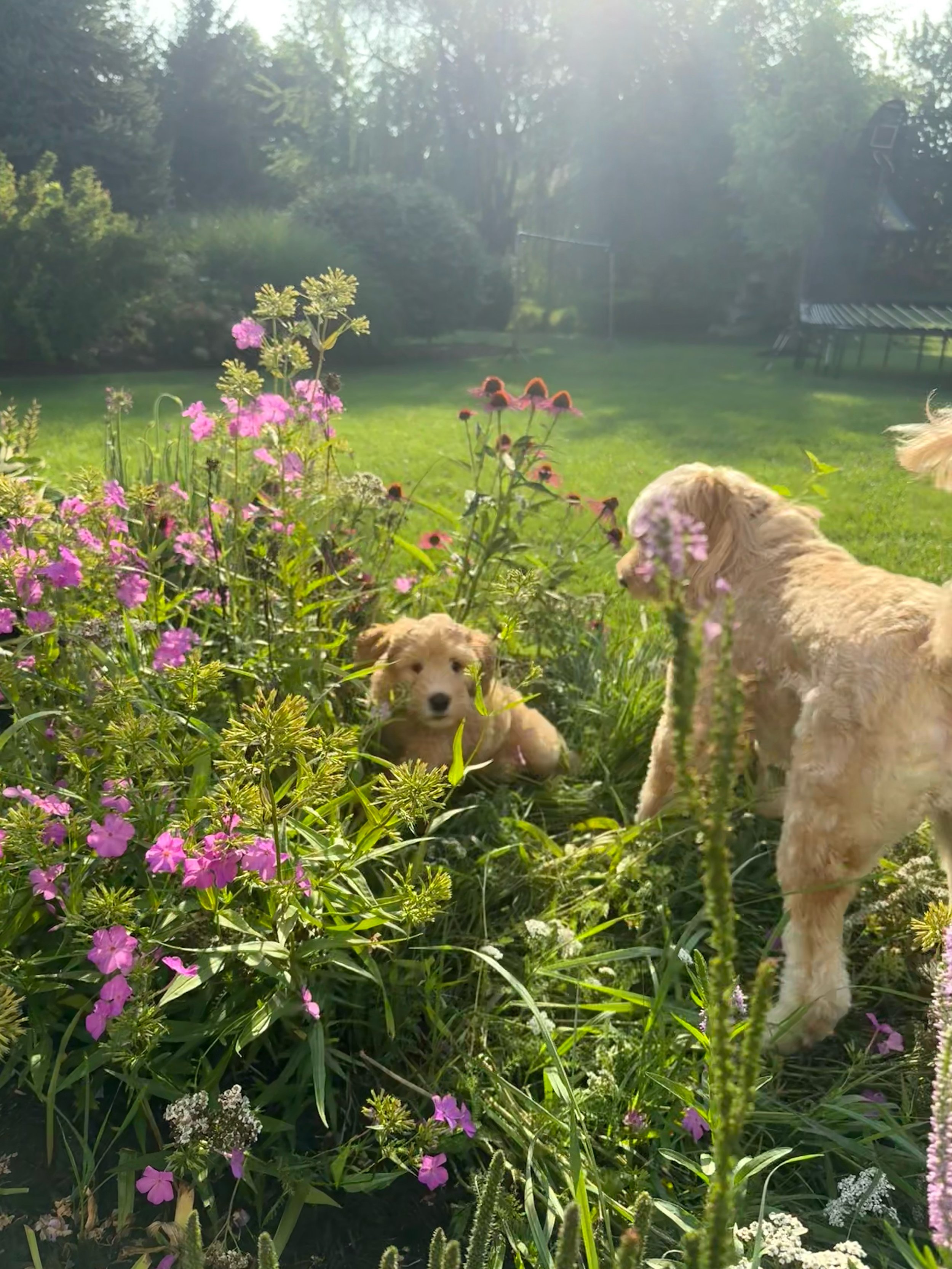
We begin potty training using a puppy litter system with pine pellets starting around three weeks of age. This helps puppies learn early that pottying happens in a designated area, not randomly throughout their space. As puppies mature and gain better control, we gradually transition them toward outdoor potty routines. By seven to eight weeks of age, puppies are going outside on a more regular basis and beginning to connect potty time with outdoor trips.
This early structure gives puppies a head start and helps families continue training once their puppy is home.
What Your Puppy Already Knows
Before going home, your puppy has:
• Been introduced to a designated potty area using pine pellet litter
• Learned that pottying happens in a specific space
• Begun transitioning from indoor litter to outdoor potty breaks
• Experienced routine and structure around potty timing
This means your puppy is not starting from zero, but continued consistency at home is essential.
What to Do When Your Puppy Comes Home
2. Keep Potty Breaks Frequent
In the beginning, potty breaks should happen at least every hour, and always after:
waking up in the morning
eating
waking from naps
playtime
coming out of the crate
Frequent trips help prevent accidents and reinforce good habits.
1. Start With the Potty Spot
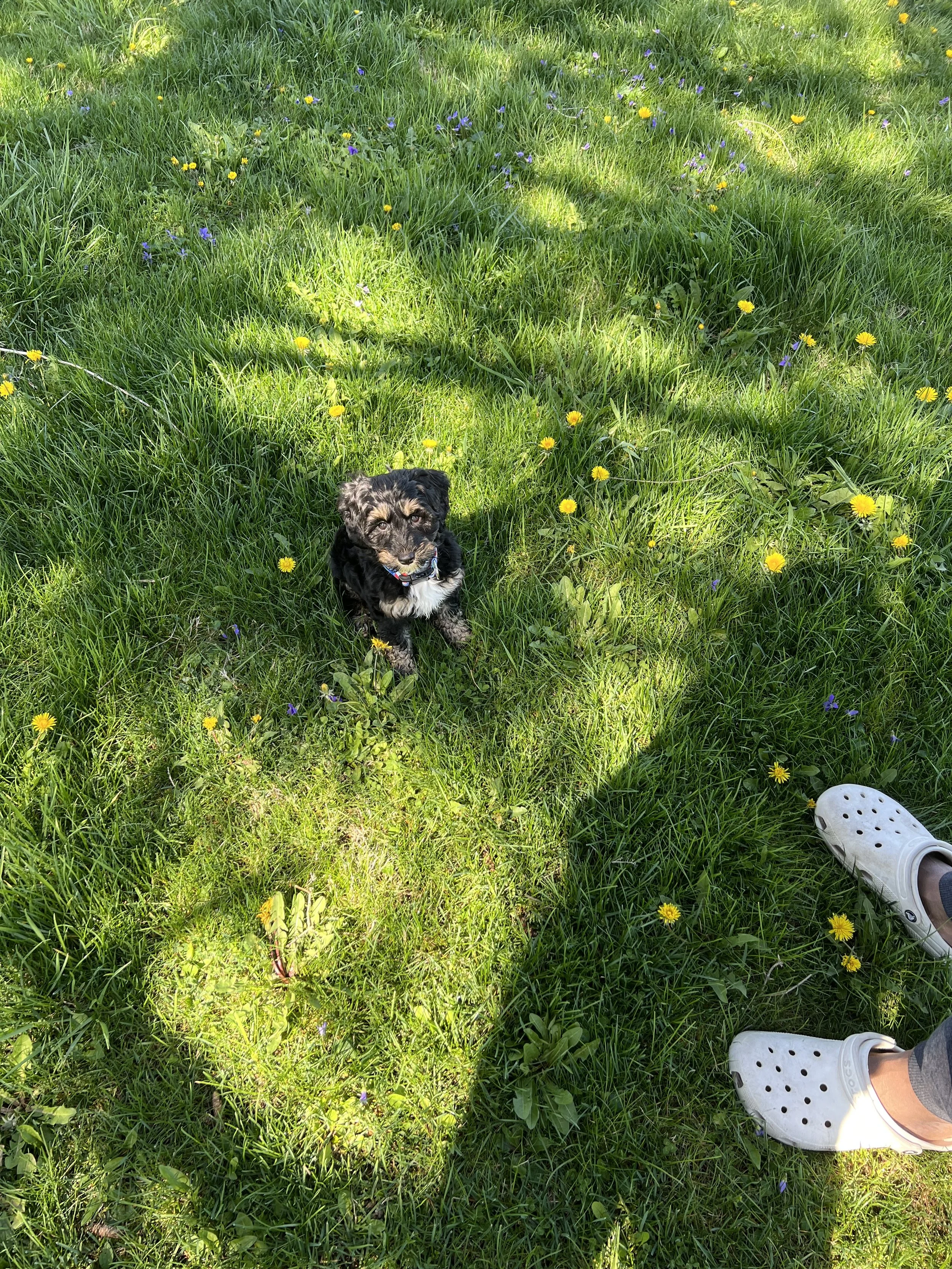
As soon as you arrive home, take your puppy directly to their dedicated potty spot. Choose one outdoor location and use it consistently so your puppy can quickly understand where pottying is expected in their new environment.
4. Watch, Cue, and Reward
Watch for signs like sniffing, circling, or wandering away from activity. When you see these cues, move outside right away. Use the phrase “go potty,” and once your puppy finishes, offer praise, praise, praise, and a treat. Consistent language and positive reinforcement help your puppy understand exactly what they did right.
3. Supervise or Contain
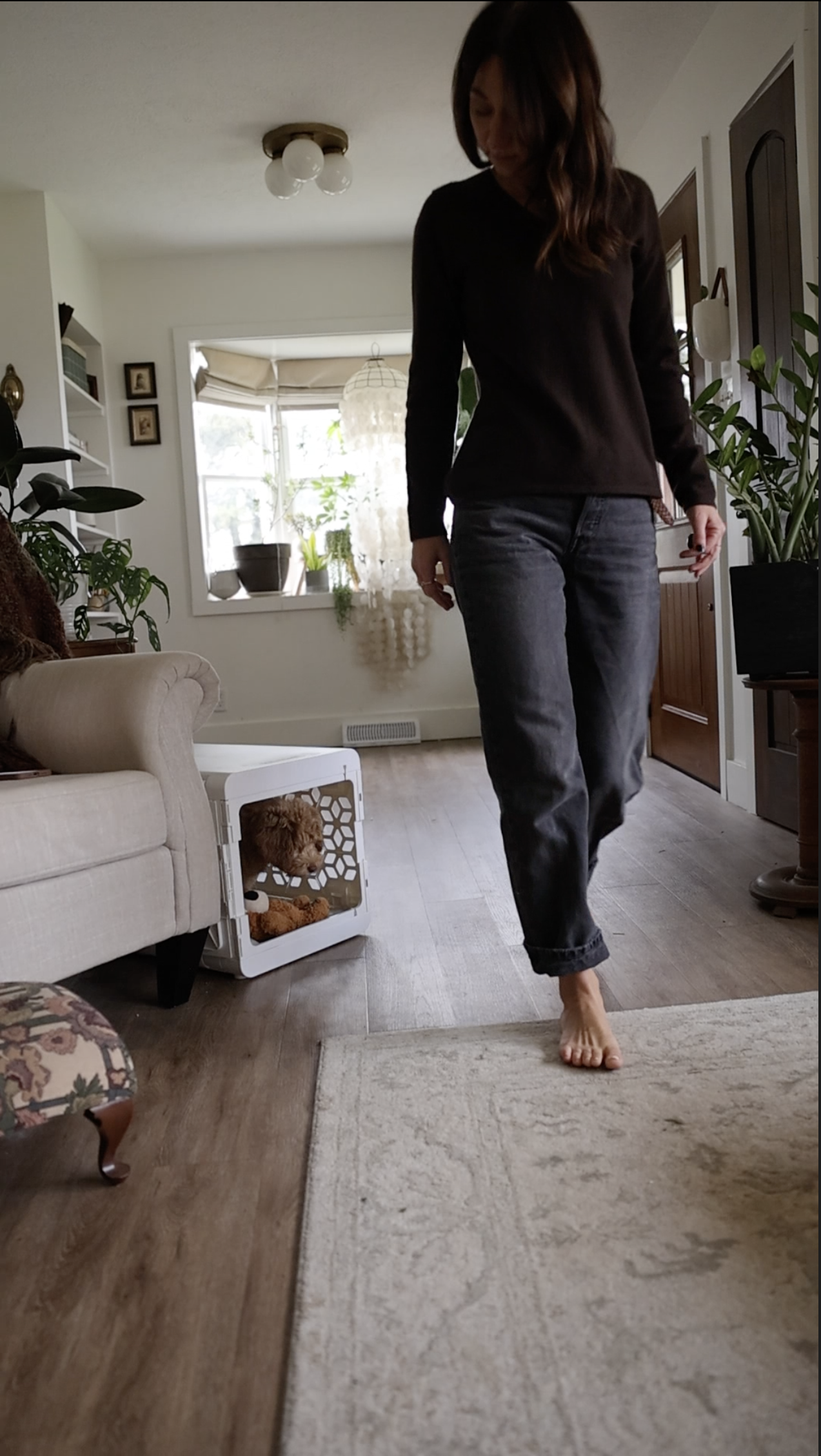
Puppies should not roam the house unsupervised. If you can’t actively watch your puppy, use the crate or tether them to you while working, doing chores, or sitting at your desk. This level of supervision is one of the most important parts of successful housetraining.