
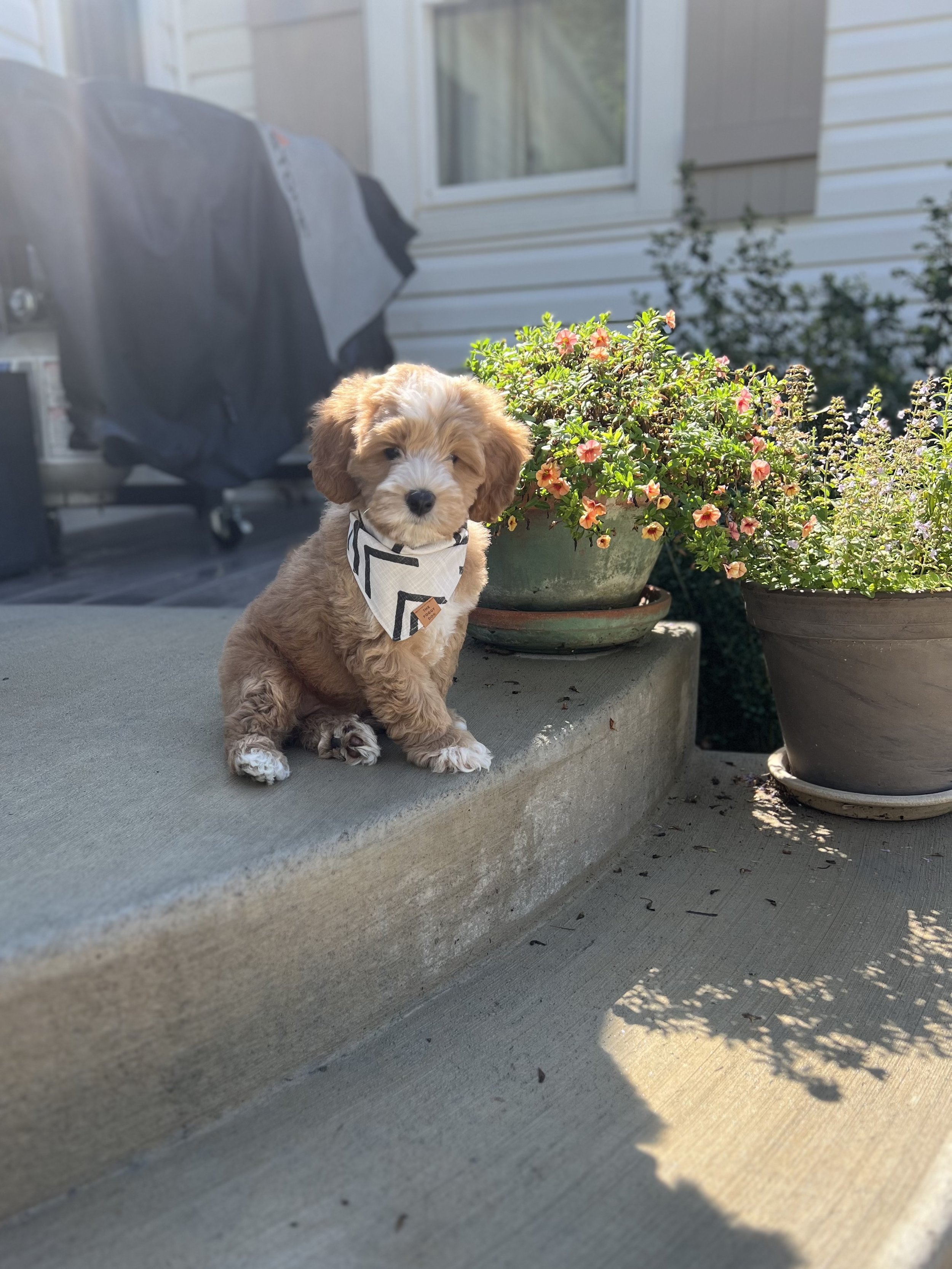
Most of what makes a great family dog doesn't happen by accident. A puppy who walks into a new house with their tail up, who doesn't panic at the vacuum, who lets you trim their nails without a fight, usually had a lot of quiet groundwork laid in their first few weeks. That groundwork is socialization, and it's a big part of how we spend our days with every litter.
Socialization isn’t just about getting puppies used to people or noises. It’s about laying the foundation for confidence, trust, and adaptability. It helps your future family member grow into the kind of dog who is relaxed around new people, curious rather than fearful in new environments, and able to settle into the rhythm of family life with ease.
What Socialization actually is?
Socialization is gently introducing a puppy to the people, animals, sounds, smells, surfaces, and everyday experiences they'll run into in life. The first few months are when puppies are most open to new things, and what they experience during that time shapes how they react to the world as adults.
It isn't about overwhelming a puppy or cramming in as many experiences as possible. It's about small, calm, positive moments that slowly stretch their comfort zone. A puppy who learns early that new things usually turn out fine tends to grow into a dog who handles life with a lot less stress.
What it looks like here
We follow the Avidog and Badass Breeder programs, and each week looks a little different as the puppies grow.
In the first couple of weeks, we start Early Neurological Stimulation, a short daily handling routine designed to introduce mild, manageable stress in a safe way. It's quick and gentle, and it's one of the first ways puppies get used to being touched by people.
As their eyes and ears open, we add new textures and sounds: soft blankets, different floors, music, the vacuum, the doorbell. Later we play recordings of things like thunder, traffic, and fireworks at a low volume so those sounds feel ordinary before they ever hear the real thing.
They meet all kinds of people. Kids, adults, men with beards, people in hats and sunglasses. The more variety they see, the less a stranger at the door seems like a big deal.
Once they're up and moving, we bring in tunnels, wobble boards, steps, and little obstacles. Watching a puppy figure out a wobbly surface for the first time is one of my favorite parts of the whole process.
Around five weeks, we start crate time and short periods of separation so the first nights in a new home aren't such a shock. We also take short car rides, which makes the drive home a lot easier.
And they get plenty of practice being cared for. Baths, brushing, holding paws, touching ears, lifting tails. It sounds small, but a puppy who's comfortable being handled makes every future vet visit and grooming appointment easier on everyone.
Puppies Aren’t Born With Manners
Even the sweetest puppy doesn't come knowing not to nip or jump. We start the basics here, like rewarding puppies for sitting instead of jumping for attention, but manners are something every family will keep teaching for a while. That's normal, and it gets easier with consistency.
Then it’s your turn
Your puppy will come home with a good start, but socialization keeps going well past go home day. The next couple of months are a big window, so keep introducing new people, places, and sounds in calm, positive ways, and talk with your vet about how to do that safely while your puppy is finishing vaccines. Puppy classes are a great next step too. We'll send you home with resources and ideas, and I'm always here if you have questions along the way.