
Early Puppy Foundations: Where We Start
There's no shortage of puppy advice out there, and a lot of it makes raising a puppy sound more complicated than it is.
What tends to get lost is the everyday stuff. Not sit or shake, but the quieter things that make a dog easy to live with. Can they settle down after playing? Are they okay having their paws touched? Can they wait a second before barreling through a door? Those are the things we focus on early, because they matter every single day for the rest of your dog's life.
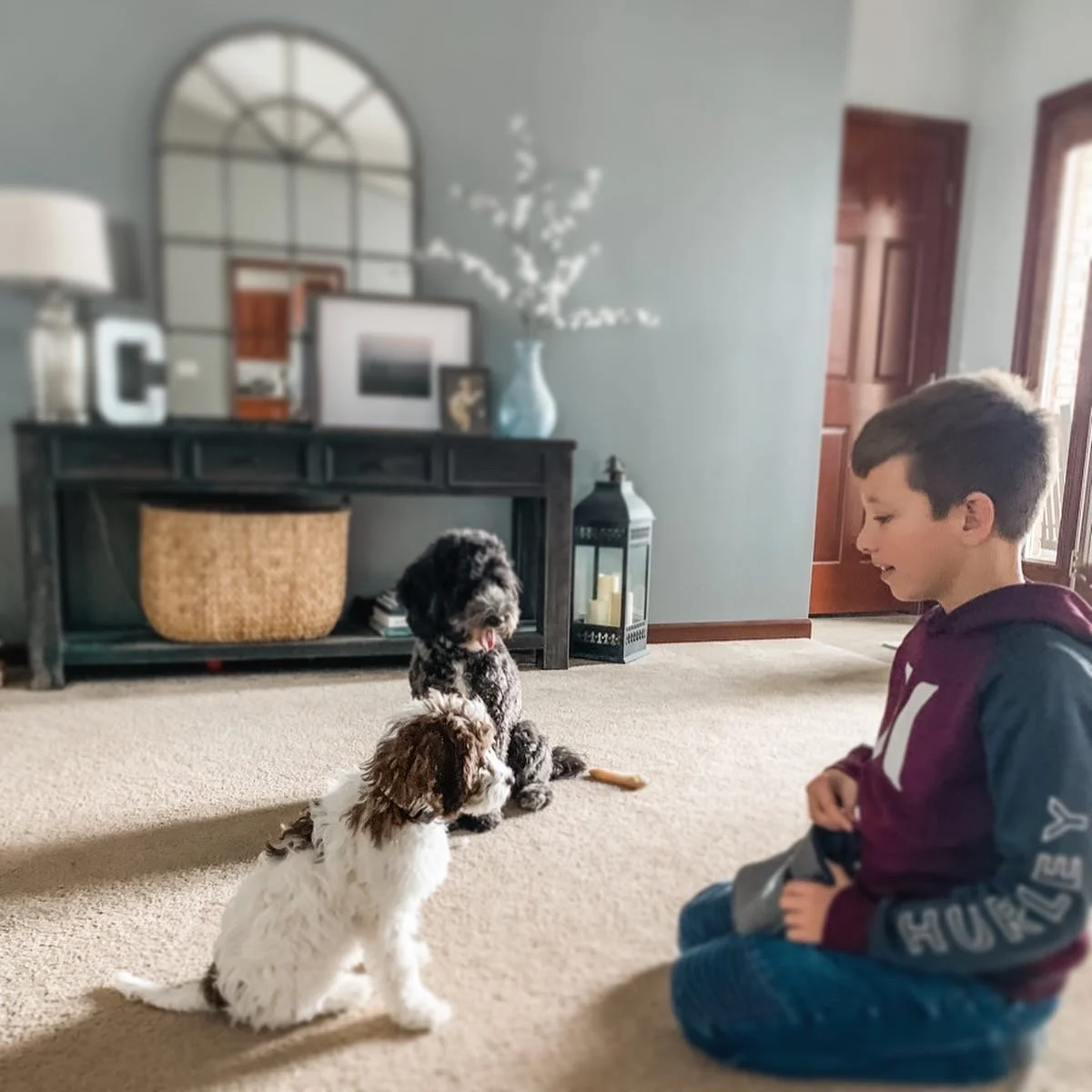
Training vs. foundations
When most people think about puppy training, they picture cues like sit, down, and come. Those are great, and they have their place. But underneath them is something more basic: how a puppy handles their own excitement, how they move through a house, how they feel about being held and cared for, and how easily they settle into a normal day. Puppies learn most of this without ever knowing they're being taught.
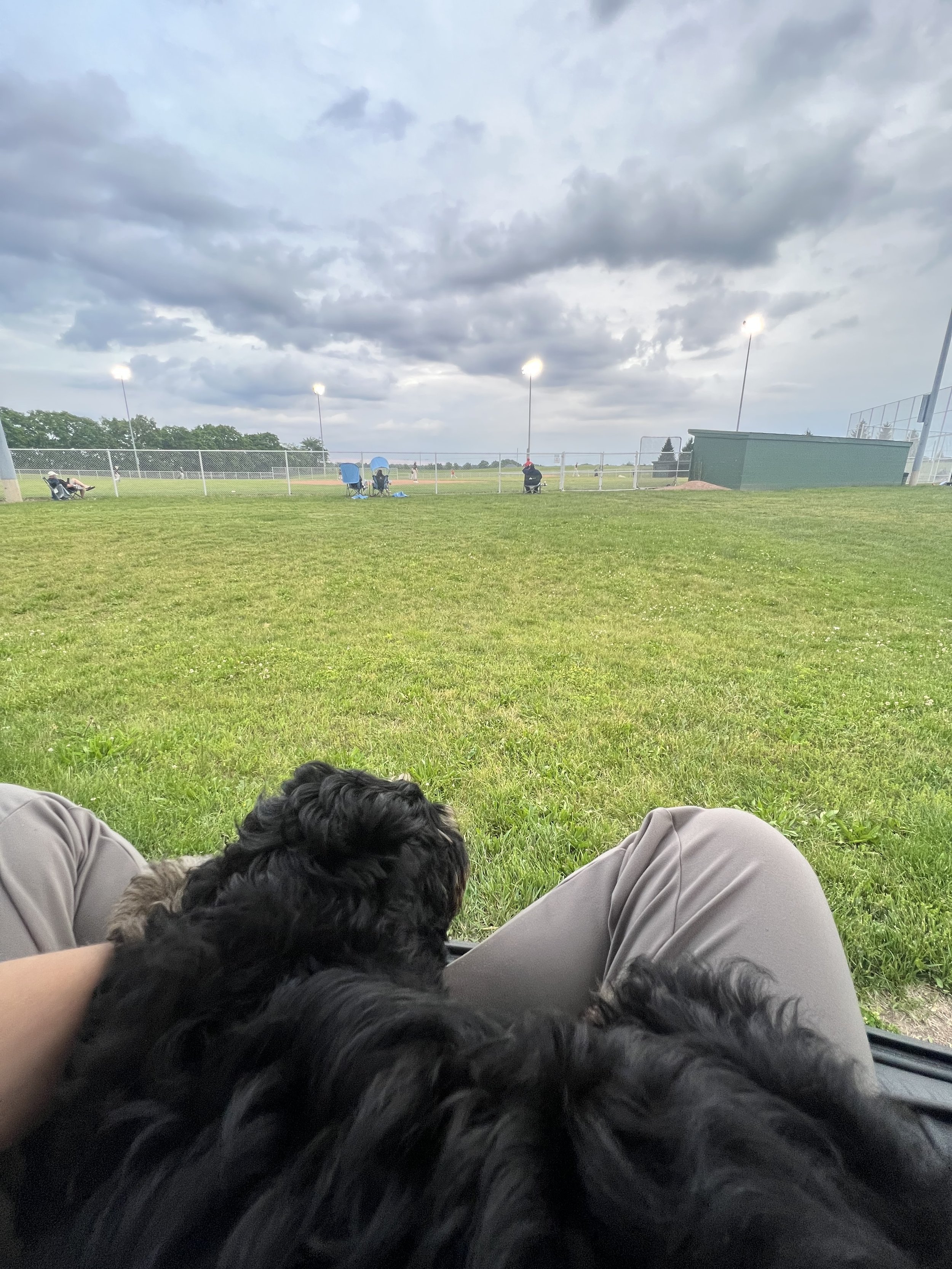
The simple act of observing
The four areas we focus on
We start at just a few days old, and we keep building on these until the day your puppy goes home. Then it's your turn.
Emotional regulation. Learning to calm down after something exciting, and to recover after something startling. A puppy who can bounce back quickly is a puppy who handles life with a lot less stress.
Cooperative care. Getting comfortable with having paws held, ears checked, nails trimmed, and coats brushed. We practice in small, calm moments so it's normal long before grooming day or a vet visit.
Purposeful enrichment. Giving puppies things to figure out, like new surfaces, small obstacles, and simple puzzles, then letting them work it out on their own instead of rushing in to help.
Everyday experiences. The ordinary sights and sounds of life, introduced a little at a time, so normal days feel normal.
What it looks like day to day
Most of this doesn't happen in a training session. It happens in small moments throughout the day. Letting a puppy sit back and watch instead of joining in on everything. Touching their paws while they're relaxed and sleepy. Building in quiet breaks between play and rest. Giving them a minute to think through something new before stepping in.
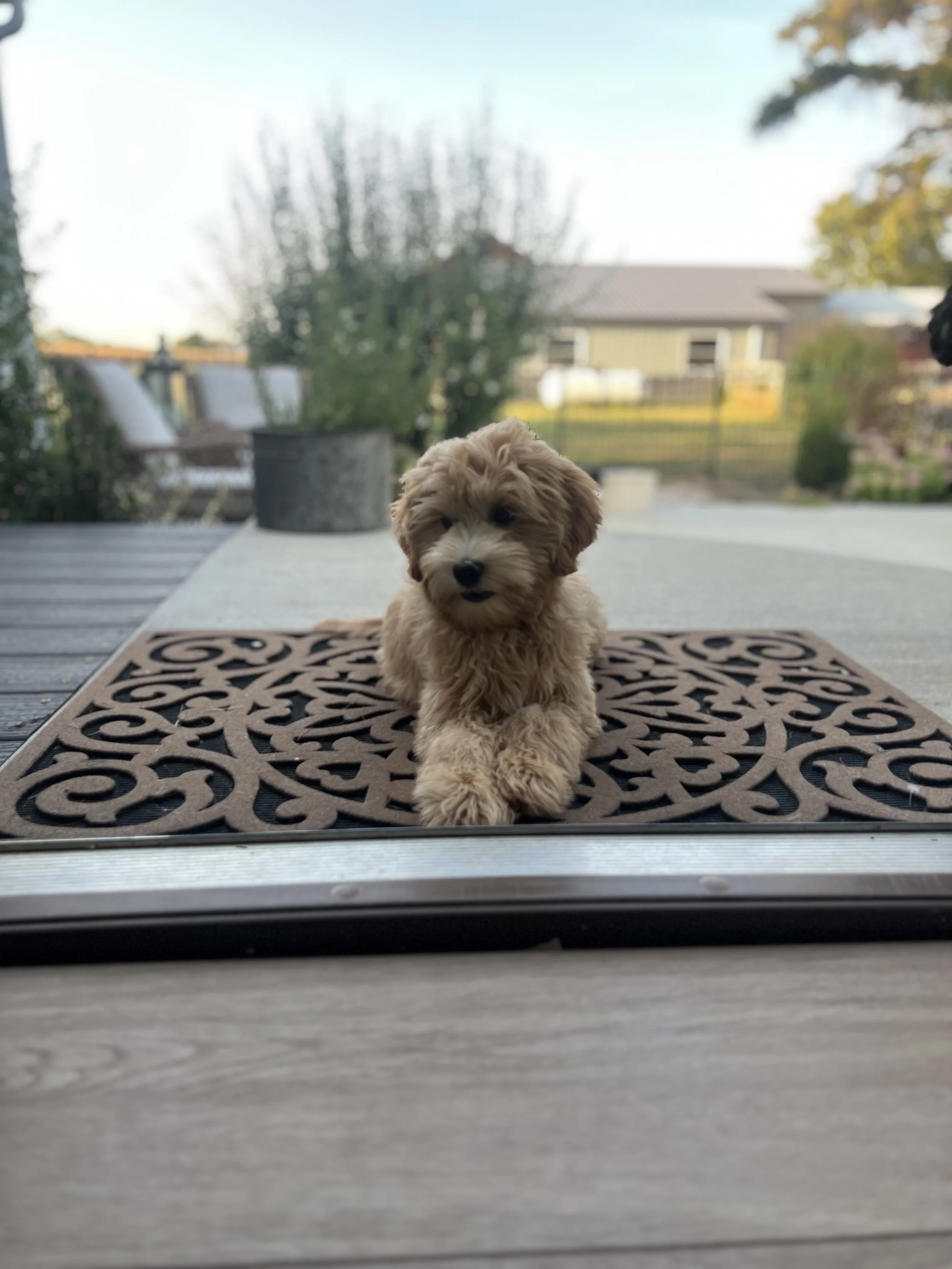
‘Wait’ Before coming through the door
Learning to wait
One of the simplest things we teach early is waiting. Our puppies learn to pause before coming out of the crate, before their food bowl goes down, and before heading through a doorway. It's a small habit, but it teaches patience and self control, and it makes life a lot easier once that puppy is 50 pounds.
You don't need a perfect schedule to keep this going at home. A routine helps, but paying attention and being consistent matters more.
Why starting early matters
Early experiences don't decide everything about a dog, but they do make a difference in how easily they adapt later. Puppies who build these foundations slowly tend to handle new situations with more confidence. Care feels less scary, routines feel more predictable, and big changes go more smoothly.