
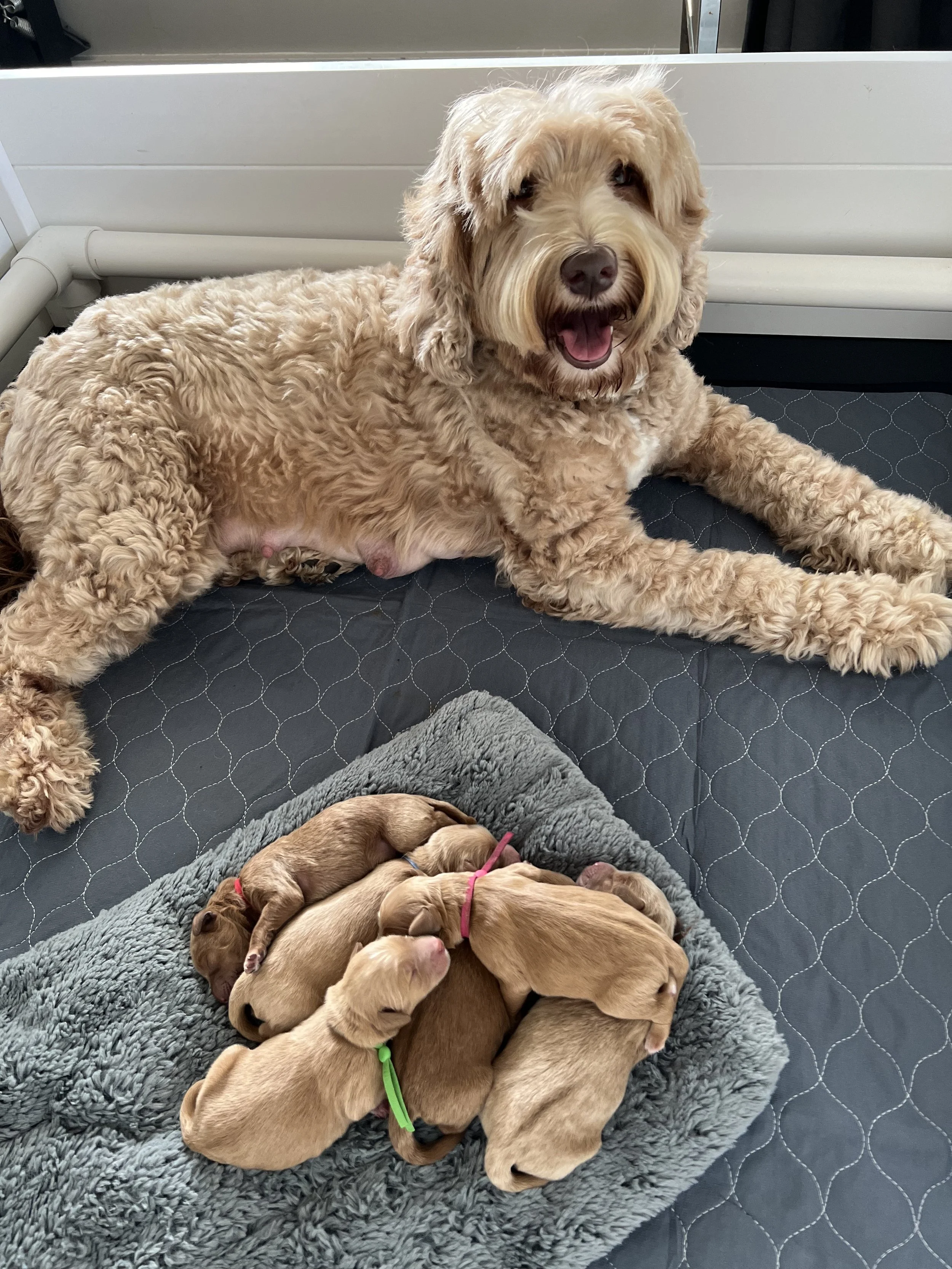
If you're starting your search for an Australian Labradoodle, you've probably noticed there are a lot of breeders out there, and it isn't always easy to tell them apart. Families ask me all the time what they should be looking for. I've been raising Labradoodles since 2014, and this is how we do things at Ohio Valley, but all of it is worth asking any breeder you're considering.
1. Breed Organization Membership

We're members of WALA. Wala sets standards for health testing and breeding practices, and both keep us learning. Membership isn't the whole picture, but it's a good place to start, and you can verify any breeder's status right on the organization's website.
2. Prioritizing Health Testing for All Breeding Dogs
Before a dog joins our program, they're tested for hips and elbows through OFA or PennHIP, along with eyes, and a DNA panel for conditions known in the breed. We are also adding cardiac screenings to our dogs as of May 2026. Testing can't promise a perfect puppy. Nothing can. What it does is lower the odds of passing along known inherited problems. A breeder should be glad to show you results, and you can look most of them up yourself on the OFA website.
Hips and Elbows: Certified by OFA (Orthopedic Foundation for Animals) or PennHIP to prevent hip and elbow dysplasia.
Eyes: Regular eye exams certified by CERF or OFA to screen for hereditary eye diseases.
Heart: Screening for congenital heart conditions.
Genetic Testing: Testing for conditions common to Labradoodles, such as progressive retinal atrophy (PRA), von Willebrand’s disease, and more.
3. How the puppies are raised
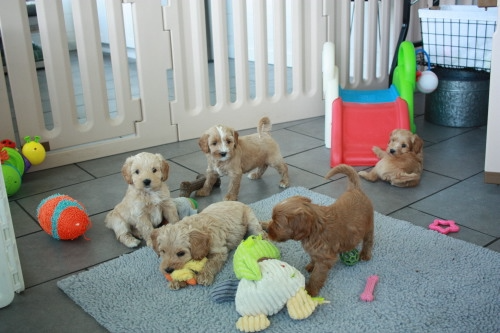
This is where I'd spend the most time asking questions. What does a puppy's day look like? How much time do they spend with people?
Ours are handled every day from birth and introduced to new sounds, surfaces, people, and experiences as they grow. We follow the Avidog and Badass Breeder programs, starting with early neurological stimulation in the first few weeks. Those early weeks shape so much of who a puppy becomes.
It's also worth asking where the adult dogs live. Our breeding dogs live with guardian families, so they're family dogs first.and ability to bond with people.
4. Matching Puppies to Families
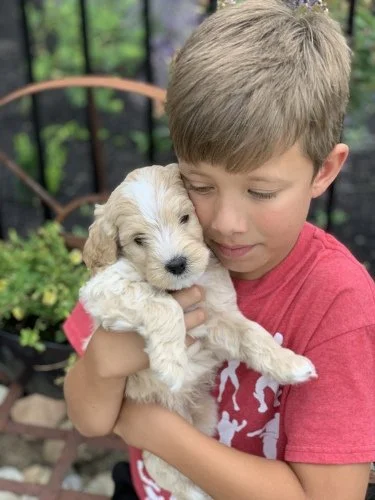
Every puppy has a personality of their own. We watch each one closely, do temperament testing, and get to know your family so we can help find a good fit. A calm puppy and a busy household with three kids might not be the best match, and that's okay. It's better to know before they go home.
5. Support after they go home
You'll get a contract that spells out what you can expect from us and what we ask of you, including a health guarantee for genetic conditions and a spay/neuter agreement. If life ever changes and you can't keep your dog, they come back to us. And the questions don't stop at pickup day. Our families still text me years later, and I love that.
A few things that should give you pause
There are a lot of good breeders out there. The right one is someone you trust and feel comfortable talking to. If you have questions about our program, or just want help figuring out what to ask, I'm always happy to chat.